


By Max Suspension · B2B sourcing and product guides
A coilover packaging brief should define protection, contents, identification and brand presentation. Artwork is only one part of that job. The approved package must also help a warehouse identify the kit, an installer check its contents and a support team trace the correct configuration.
For private-label buyers, approve a packed sample alongside the product specification. A flat carton proof cannot show whether components move, rub against each other or become difficult to identify after unpacking.
Give the package a controlled bill of materials
List the outer carton, internal supports, bags, labels, instructions and any included tools. Connect that packaging record to the finished-kit SKU and product revision. If several applications use the same outer box, record the internal arrangement and label differences for each one.
Ask which components need separation or surface protection. The packaging supplier and manufacturer should propose an arrangement appropriate to the actual contents and transport route. Do not assume a photograph of a tidy open box demonstrates adequate transport protection.
Use this packaging approval matrix
| Area | Define in the brief | Check on the packed sample |
|---|---|---|
| Product identity | Brand SKU, supplier reference and revision | Label matches the enclosed kit |
| Component protection | Proposed supports and protective materials | Parts are separated and retained as designed |
| Contents | Quantity and identification of each supplied item | Unpacking matches the approved list |
| Warehouse handling | Carton identification and requested scan fields | Information remains accessible after packing |
| Installer information | Application notes and document version | Correct instructions accompany the kit |
| Artwork | Files, colors, placement and approval owner | Printing matches the approved proof |
Keep application information readable
Use a clear brand SKU and a confirmed application description. Avoid squeezing a long, unverified vehicle list onto a small label. If fitment detail is maintained digitally, make the label’s identifier unambiguous and keep the linked information under revision control.
Where your channel requires a barcode, confirm the identifier scheme and ownership with the party maintaining the product data. Do not invent retail identifiers. If a QR code links to instructions, test the destination and decide how the document will remain available when the website changes.
Country-of-origin statements, warnings and other market-specific markings should be reviewed for the intended destination by the responsible compliance adviser. Do not copy another brand’s label as evidence that the same wording applies to your project.
Treat instructions as part of the product release
An instruction sheet should identify the application or product family it covers and the document revision. Installation and adjustment guidance must come from the appropriate technical source for that configuration. Packaging staff should not choose a generic sheet because it fits the carton.
For a distributor serving several languages, assign translation review and document approval before print production. Keep technical terms consistent with the dealer catalog. If paper and digital versions coexist, give them a common revision reference.
The kit contents checklist provides a starting point for distinguishing supplied items from original parts that must be retained.
Approve the packed product, then evaluate the shipping arrangement
Inspect a fully packed sample with the intended components. Record its packed dimensions, weight basis, component positions and unpacking sequence. Ask the packaging specialist to propose appropriate validation for the actual distribution route; the method and acceptance criteria should be agreed rather than assumed.
If multiple kits will be consolidated, review the outer shipping arrangement as well. A retail carton and the shipment unit serve different handling needs. Record any restrictions or instructions the logistics provider needs, using verified packing information.
Keep photos of the approved pack-out with the revision record. When a component or carton changes, review whether the old arrangement remains suitable before reusing the same pictures.
Decide what happens to unused branded material
Printed materials may have a different purchasing minimum from finished kits. Agree who pays for the unused balance, where it is held, how quantities are reported and whether it can be used after a revision. The MOQ guide explains why this needs its own line in the commercial discussion.
For a rebrand, record which old materials are obsolete and which can remain in use. Do not let a new label file silently overwrite the approval record for stock already produced.
Send a brief that can be quoted
Provide the brand artwork, application/SKU list, required contents, language needs, distribution route and order quantities. Include any warehouse labeling requirements from your customer. Max Suspension’s private-label service includes packaging discussions; send the project brief to review the available scope and sample approval steps.
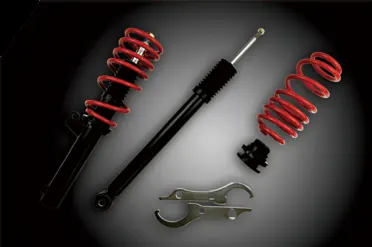
Cover: AI-generated editorial illustration based on Max Suspension product imagery. Refer to the confirmed specification for actual product details.